Stevie
The Power of the DogStevie, later called O-Bop, moves from a teenager pleased to receive a nickname from older boys to Callan’s accomplice in murder and the reshaping of Hell’s Kitchen’s underworld. His part in the story is marked by that shift: a name first given for the way he walks becomes attached to a partnership that claims power through violence, bookkeeping, and bravado.
Identity and Introduction
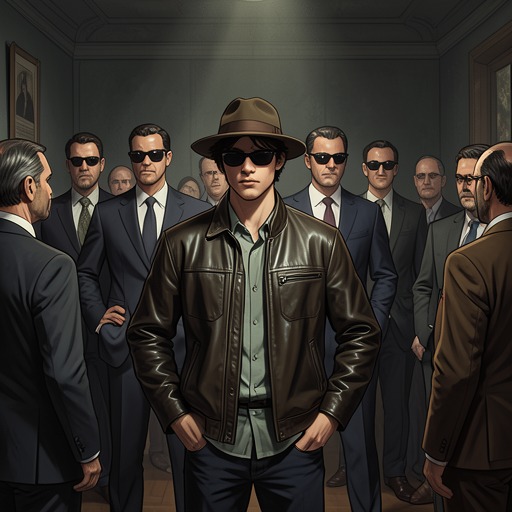
The nickname begins when Stevie O’Leary is about fifteen and taking a break from street hockey with older boys. Kenny Maher suggests calling him Bop because Stevie bounces with every step. Stevie is pleased rather than offended: being noticed and named by the older boys carries its own appeal. The name therefore starts as an affectionate, slightly mocking observation of his gait, not as a title earned through criminal standing. In this early scene, Stevie is still someone whose identity is being assigned by others, and whose response shows that the assignment matters to him.
The bar scene years later places O-Bop beside Callan, drinking beer during a hot New York afternoon. The setting is already charged: Little Mickey Haggerty occupies the far end of the bar, playing Moon River repeatedly on the jukebox, while the men know about his grievance. O-Bop is focused on what was done to Michael Murphy and cannot let the matter go. The narration later notes that he and Callan have spent the day walking along the Hudson, smoking a joint and drinking beer from paper bags; they are affected, though not wholly incapacitated. Their talk thus takes place within an atmosphere of grievance and impaired judgment, before the argument becomes immediate violence.
Partnership and Violence
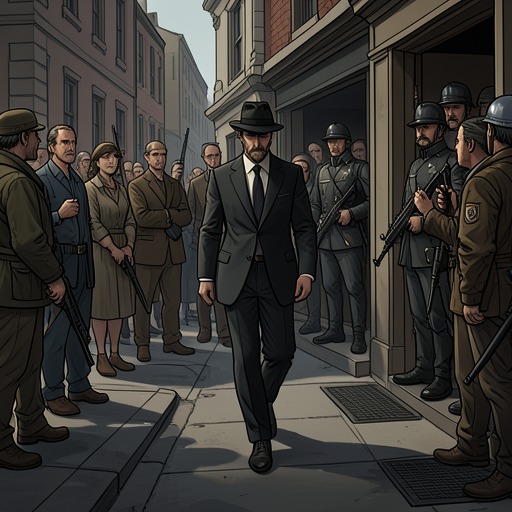
The defining break comes when Eddie the Butcher demands that Callan choose between him and the other side. Callan answers by choosing O-Bop and shooting Eddie twice in the forehead with a .22 hidden under his shirt. O-Bop’s response is not to withdraw from the killing: he takes the .38 from Eddie’s hand, puts it in the dead man’s mouth, and repeatedly pulls the trigger. He is crying and shouting obscenities as he does so. The scene gives his violence an unsettled quality. He participates in the act, but the crying and shrieking make it impossible to read his behavior as calm professional composure.
The episode also establishes that the partnership is expressed through action under pressure. Callan’s choice makes O-Bop the person for whom he openly takes a side; O-Bop, in turn, acts at the corpse after Callan has fired. The sequence does not explain the full history of their alliance, but it shows its force at a decisive moment: a demand for allegiance becomes a killing, and the two men leave the scene bound by what they have done together.
The Rising of the Moon River and Its Spoils
A month after the event known in Irish Hell’s Kitchen as the Rising of the Moon River, Callan is still alive and has become a neighborhood hero. O-Bop shares in the change in status, though the narration identifies Callan, rather than O-Bop, as the newly celebrated figure. The contrast is striking: the violence that might have ended Callan’s life instead precedes a period described as prosperous for the men in the Kitchen.
During the same aftermath, Jimmy Peaches is dealing with Matt Sheehan while Callan and O-Bop work over Sheehan’s little black book with a black felt-tip pen. They erase some entries, reduce others, and preserve the ones they expect to yield the greatest return. This is not simply a raid on a ledger: the pair selectively alter who owes what, making the book an instrument for redistributing debts and prospective gains. Their pleasure in the work underscores how thoroughly they treat the upheaval as an opportunity. Violence has unsettled the old order, and they use the written record to decide which parts of it to erase and which to keep for themselves.
Claiming the West Side
Afterward, O-Bop stands in the street, looks up at the blue sky, and asks Callan whether he understands what their situation means. When Callan asks him to explain, O-Bop throws an arm around him and declares that they are the kings of the West Side. The gesture turns a private partnership into a public claim, and the phrase casts their new position as rule over a territory rather than a temporary advantage. Its confidence is also sharpened by the account of the book: their ascent rests not only on surviving the Rising but on choosing which debts remain valuable.
O-Bop’s arc is presented through a small number of sharply connected details rather than an extended account of his private life. The teenage nickname, the killing of Eddie, the altered debt book, and the boast in the street trace a movement from seeking recognition to asserting authority. The name itself carries that movement: what began as a description of a boy’s bouncing step becomes the name of a man who stands beside Callan and announces their dominion over the neighborhood. The narrative leaves the durability of that claim unstated; what it establishes is the moment when O-Bop believes their survival and gains have made them rulers of the West Side.